The re-utilization of discarded tires is crucial for environmental protection and circular economy.
Due to their non-degradable nature and large size, discarded tires can cause serious environmental pollution if not properly managed.
Solutions
Tires and rubber
Advantages of SID solution
- High processing efficiency, quickly converting discarded tires into particles, chips, or powder to meet subsequent treatment requirements.
- Integrates cutting, shredding, sorting, and other functions into a one-stop processing system, simplifying the operational workflow.
- Capable of processing tires of various sizes and types (such as passenger car tires, truck tires, and industrial tires), offering high compatibility.
- Automated operation reduces labor and operating costs.
Application fields
- Rubber particles: Used for sports fields, road cushioning layers, and industrial fillers.
- Rubber powder: Used for asphalt, rubber products (such as shoe soles, seals), or plastic reinforcement.
- Steel wires: Recycled for steelmaking or other metal processing.
- Fibers: Used as concrete reinforcement materials or low-cost fuel.
The re-utilization of discarded tires is crucial for environmental protection and circular economy. Due to their non-degradable nature and large size, discarded tires can cause serious environmental pollution if not properly managed.
Solutions
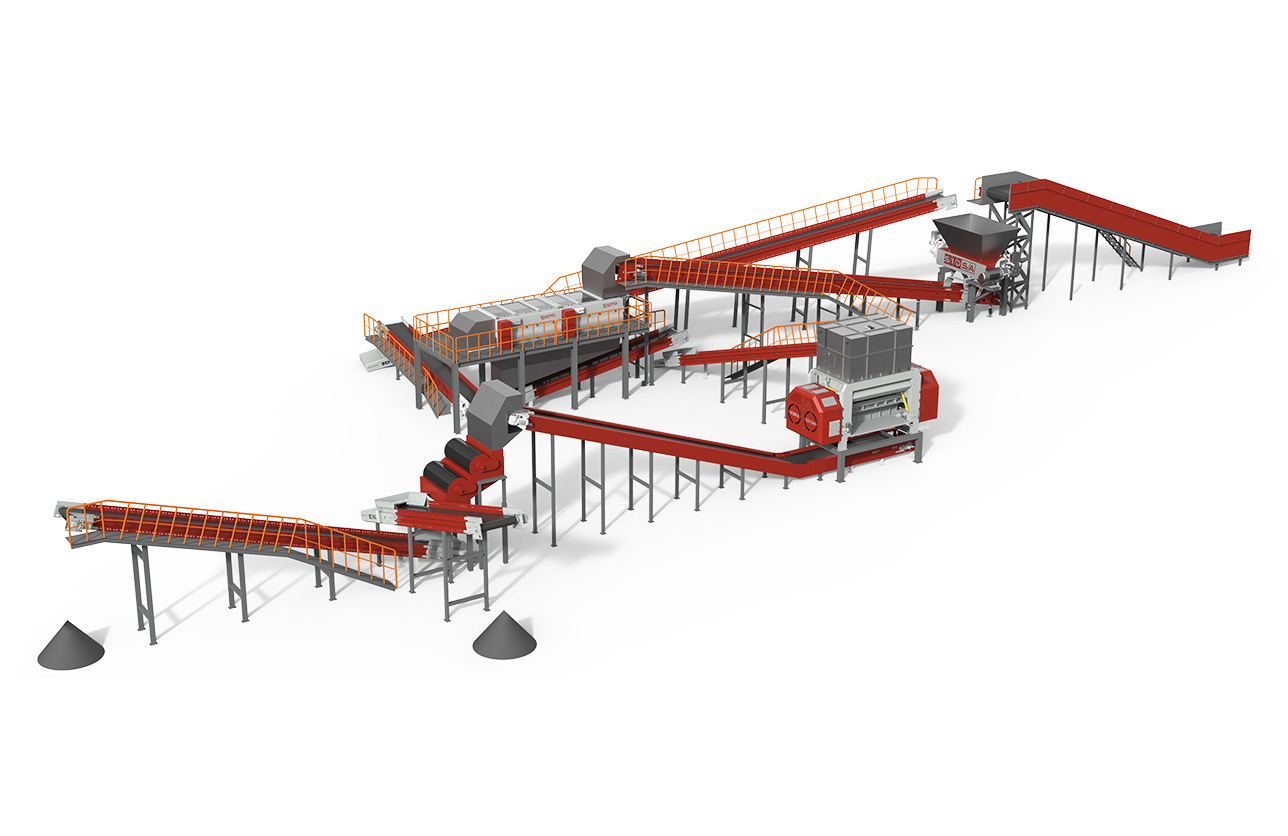
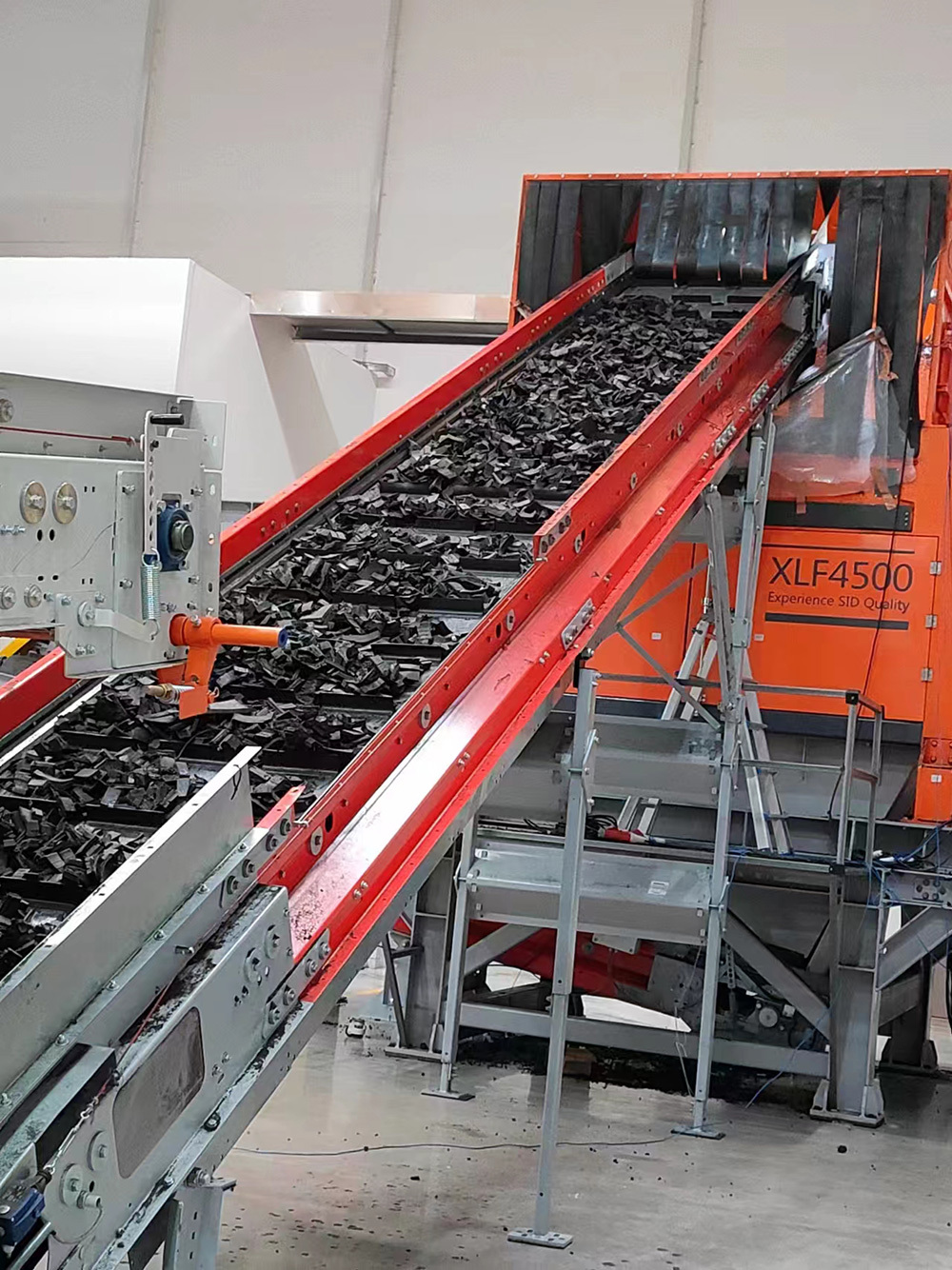
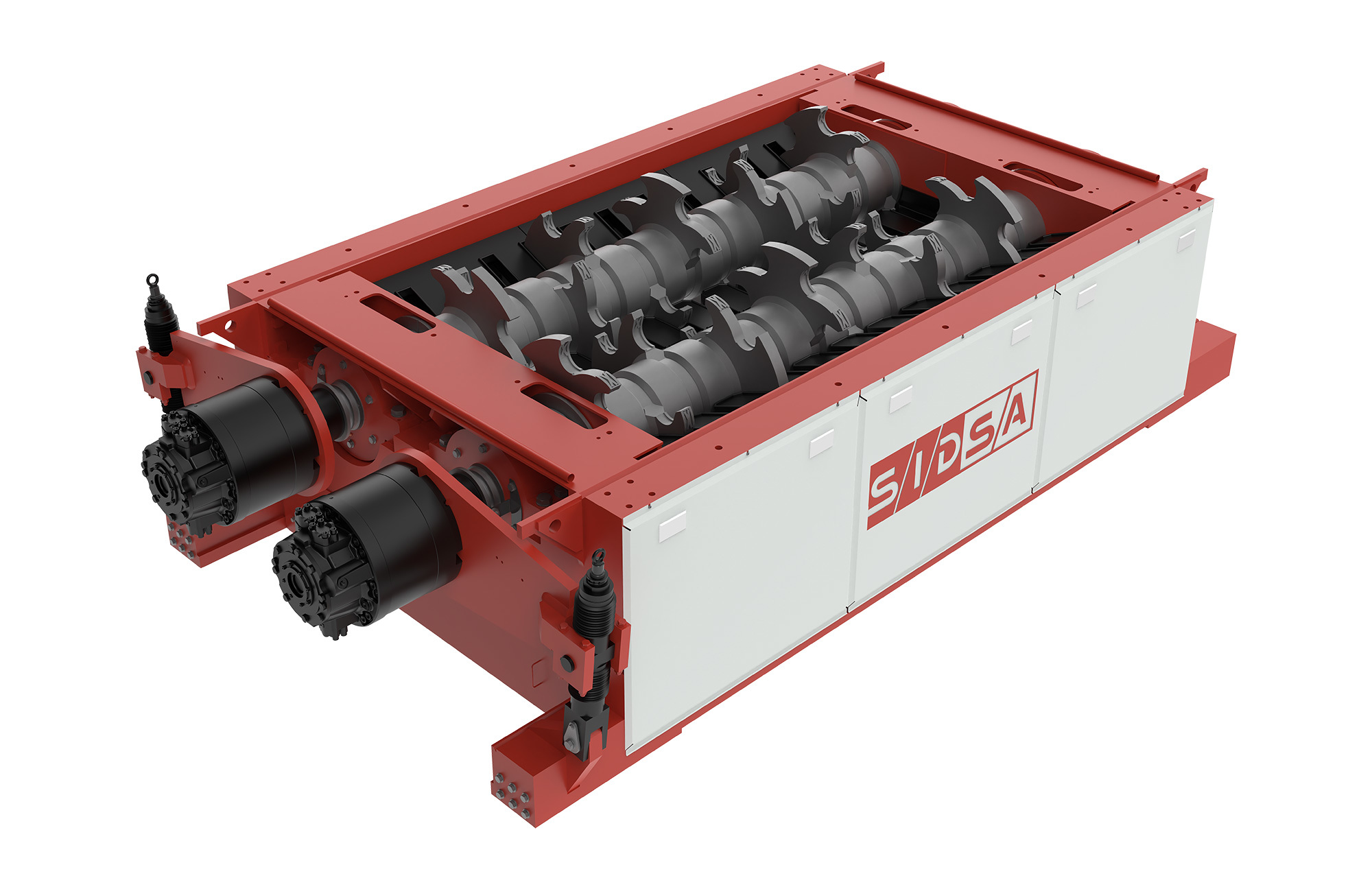
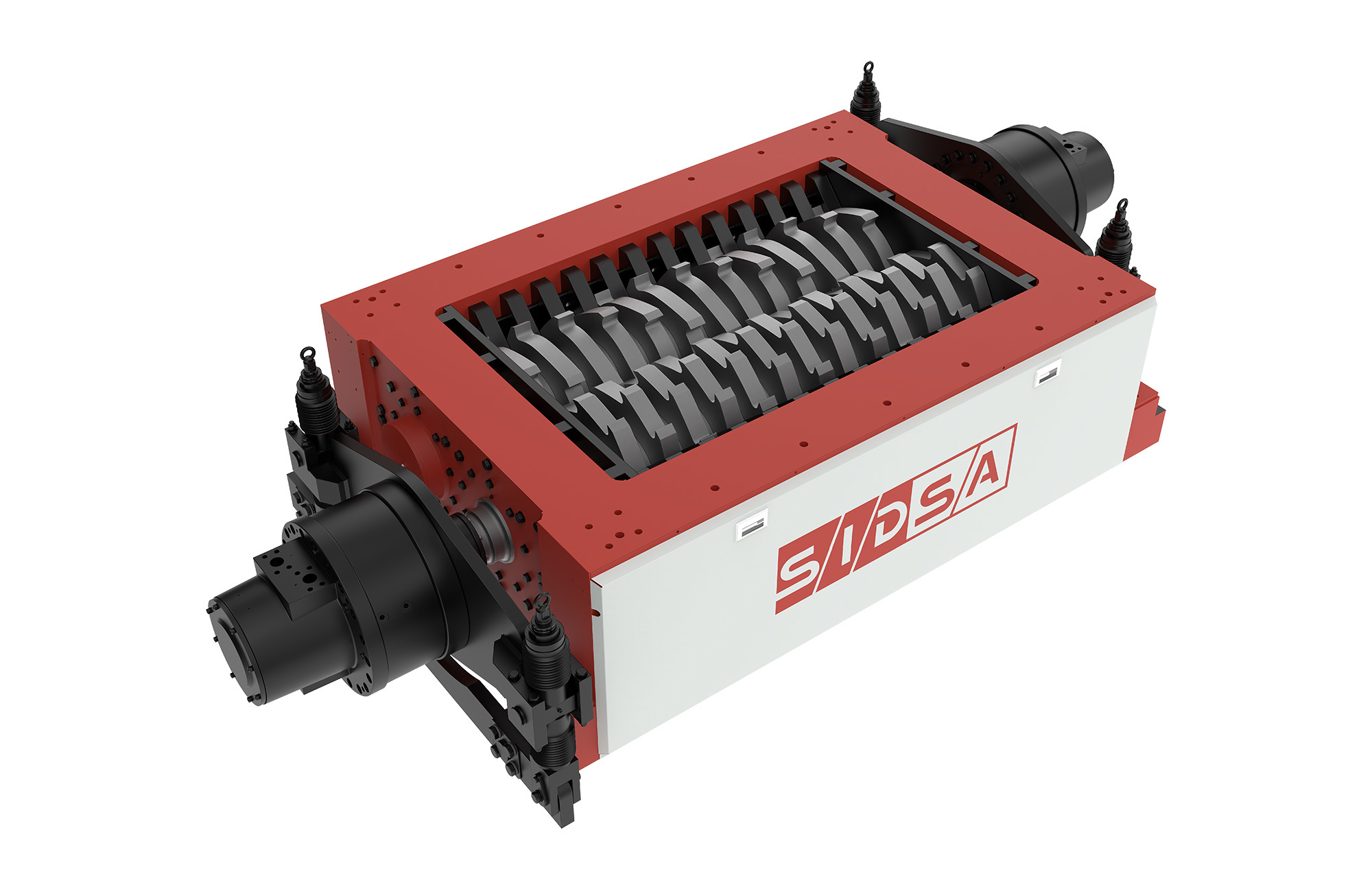
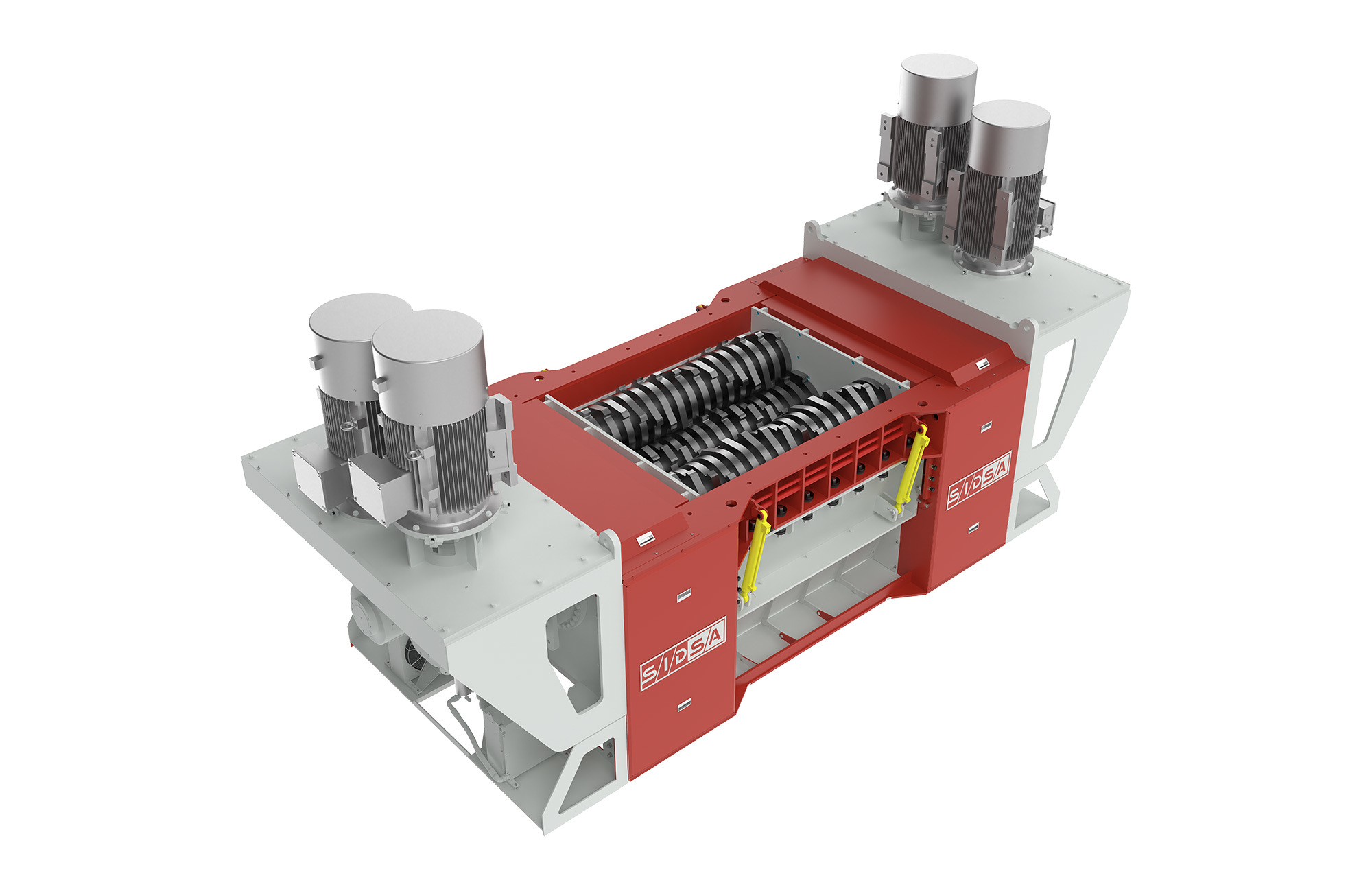
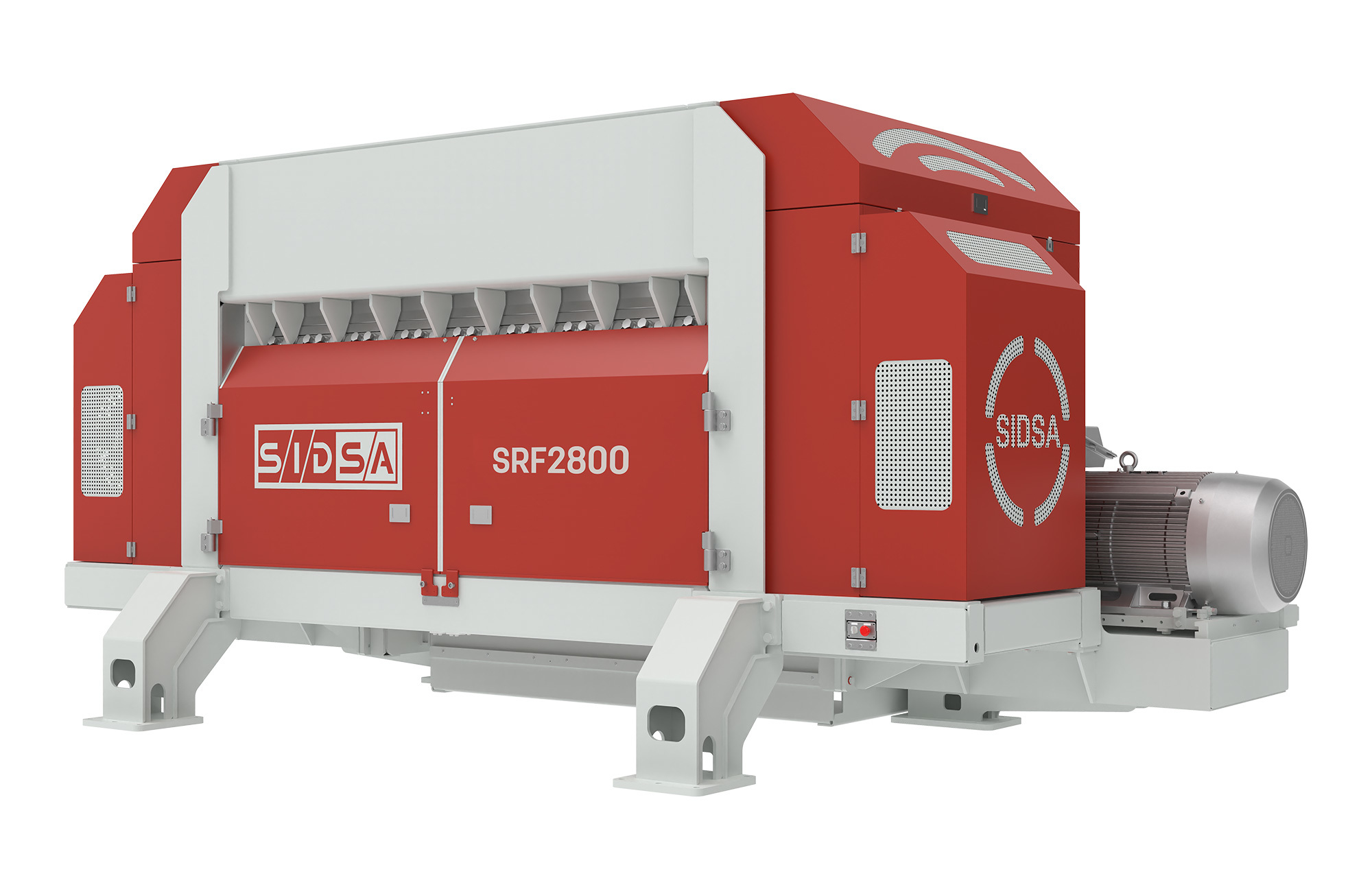
Shredding of discarded tires is the first step to enable re-utilization. Through primary and secondary shredding, tires are processed into small particles or rubber powder, and steel wires are separated using a magnetic separator. Our processes meet the particle size requirements for most recycling and incineration applications.
Advantages
- High processing efficiency, quickly converting discarded tires into particles, chips, or powder to meet subsequent treatment requirements.
- Integrates cutting, shredding, sorting, and other functions into a one-stop processing system, simplifying the operational workflow.
- Capable of processing tires of various sizes and types (such as passenger car tires, truck tires, and industrial tires), offering high compatibility.
- Automated operation reduces labor and operating costs.
Application fields
- Rubber particles: Used for sports fields, road cushioning layers, and industrial fillers.
- Rubber powder: Used for asphalt, rubber products (such as shoe soles, seals), or plastic reinforcement.
- Steel wires: Recycled for steelmaking or other metal processing.
- Fibers: Used as concrete reinforcement materials or low-cost fuel.
What Else Might You Learn?
SIDSA focuses on technological research and innovation in the field of waste pretreatment
The SIDSA SMP® system has operated continuously for 21 years in China, proving exceptional reliability in hazardous waste pre-treatment. Over 60% of enterprises choose SIDSA solutions. The latest SIDSA SMART SOLUTIONS integrates IoT, AI and big data for full-line coordination and predictive maintenance. As the industry pursues high-quality operation, SIDSA delivers stable, safe and intelligent waste treatment solutions.